
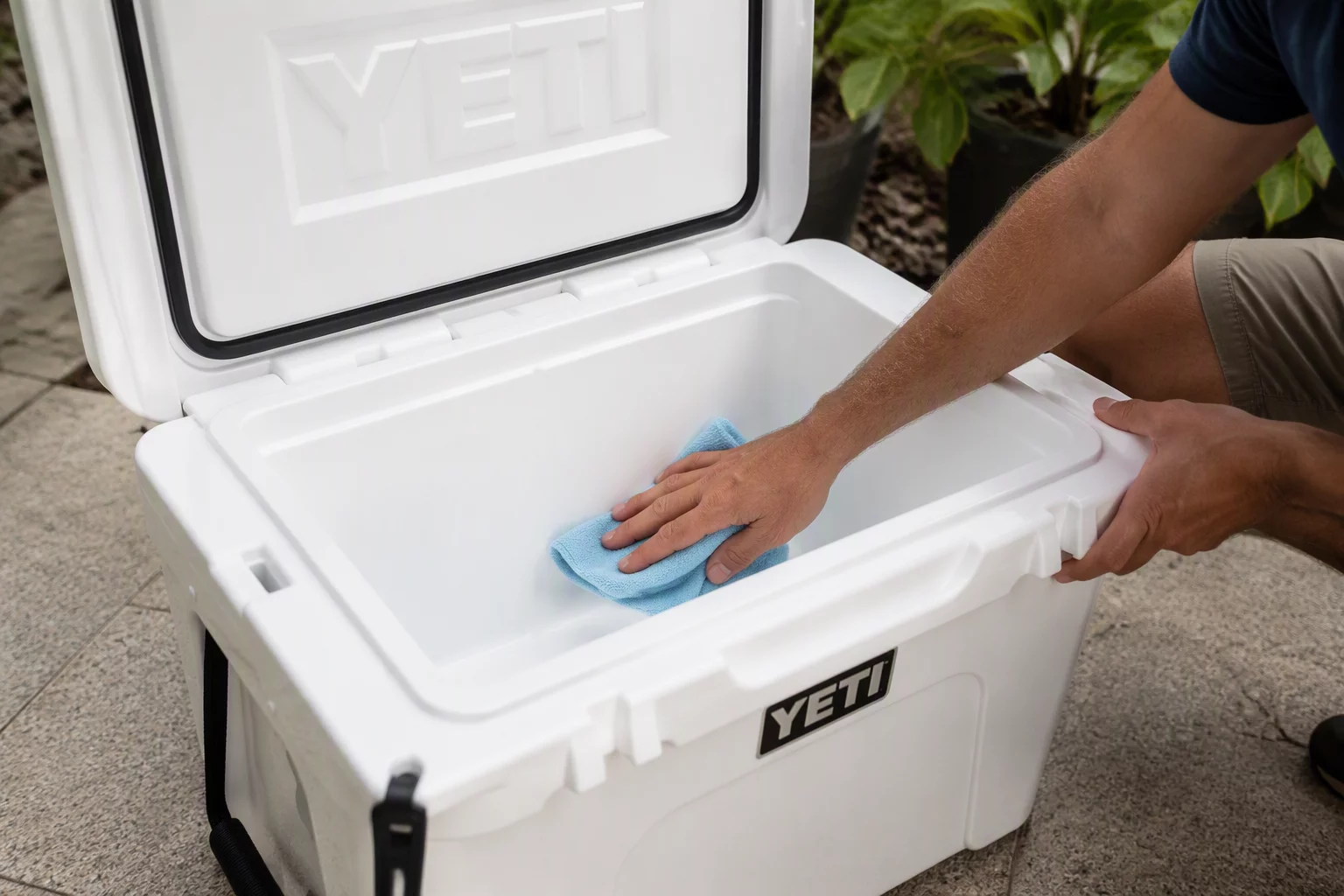
Essential Cleaning Protocols for Hard and Soft Coolers
Proper cooler maintenance protects food safety and extends the lifespan of rotomolded shells, rubber latches, and insulation seals. Neglecting post-trip cleaning leads to stubborn mildew and lingering fish or food odors that can ruin future getaways.
Every return from the trail or lake calls for immediate attention. Empty standing water promptly through the drain plug, brush away loose sand, and use warm water with a mild dish soap across all internal and external surfaces. Harsh abrasive scrubbers can scratch food-grade polyurethane liners, creating microscopic crevices where bacteria thrive.
Step-by-Step Maintenance Routine
- Deep sanitization wash: Mix baking soda and warm water into a thick paste to scrub away stubborn stains and organic residues gently.
- Complete air drying: Leave the lid wide open in a well-ventilated, shaded area until every hinge, gasket, and drain groove is completely dry.
- Unlatched off-season storage: Store your cooler in a cool, dry garage or closet with the lid unlatched or cracked slightly to preserve rubber seals and prevent trap odor buildup.
Pro Odor Elimination Tip
For pungent smells like fresh fish or spoiled dairy, wipe the interior with a 50/50 mixture of white vinegar and water, then place an open box of baking soda inside for 48 hours before long-term storage.
Community Discussions
2 CommentsCleanFreak
Verified ExplorerOdor Removal Success
Baking soda works wonders for the smell. Left a bowl inside overnight after a fishing trip and it was completely odor-free.
Bloom Support Team
StaffThanks for sharing! Baking soda is also great because it avoids abrasive chemicals that could degrade the food-grade interior liner.